
My Personal Experience: The Silent Breach That Taught Me True Vigilance
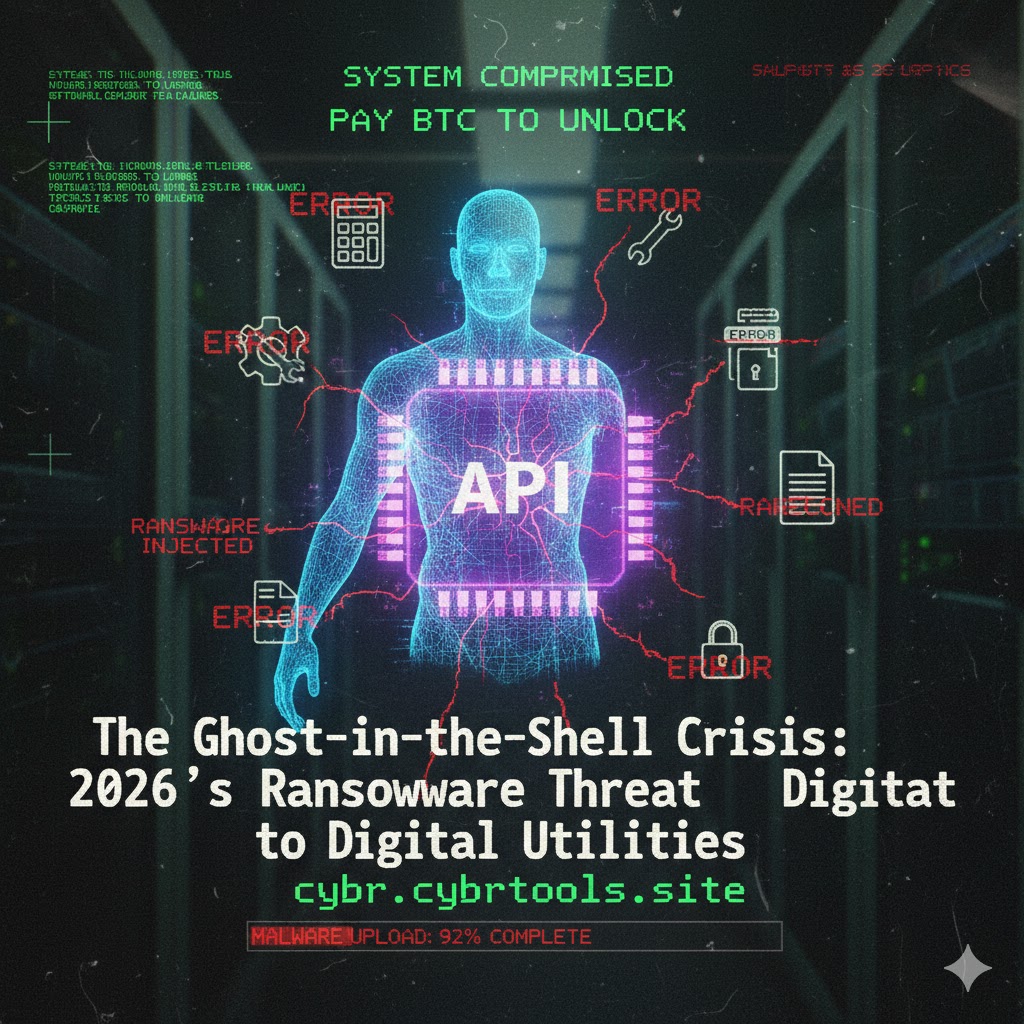
A few years back, I was managing a suite of Web Tools that I felt were completely secure because they didn’t handle any sensitive financial data. I had a simple PDF-to-Word converter running on a sub-domain, and because it was a “free utility,” I didn’t prioritize its security updates as much as my main platform. One Tuesday afternoon, I noticed my server latency spiking to 100%. I assumed it was just a surge in traffic. However, upon deeper inspection, I discovered a “Ghost-in-the-Shell” script hidden inside the temporary upload folder of that converter. A hacker had exploited a minor vulnerability in an outdated image-processing library to gain “Remote Code Execution” (RCE). They weren’t stealing my data; they were using my server as a launchpad to attack high-value government targets, effectively making me an unwilling accomplice in a global cyber-op. That terrifying week of forensic clean-up is why I now treat every single Digital Utility on cybr.cybrtools.site with the same level of scrutiny as a banking app.
1. The New Frontier of Cyber News: Why 2026 is the Year of the “Utility Exploit”

In the latest cycle of Cyber News, we are seeing a dramatic shift in how threat actors choose their targets. In previous years, the focus was on direct data theft from large corporations. However, in 2026, the strategy has evolved into “Supply Chain Utility Attacks.” Instead of attacking a bank directly, hackers are targeting the small, everyday Digital Utilities that bank employees use—such as unit converters, document formatters, or simple API testers. These tools are often overlooked by corporate firewalls because they seem harmless. Yet, as my own experience showed, a single unpatched library in a web tool can provide enough leverage for a hacker to tunnel into a much larger network. This is the “hidden crisis” of our modern ecosystem: we have become so reliant on these micro-tools that we have forgotten to audit the very code that powers them.
This evolution in cybercrime means that the traditional “perimeter defense” model is officially dead. You cannot simply build a wall around your main assets and hope for the best. Hackers are now looking for the “softest” entry point, which is almost always a third-party utility or a legacy script left on a server for convenience. This is why on cybr.cybrtools.site, we emphasize that every single Web Tool you deploy must undergo a rigorous security lifecycle. If you are hosting a tool that hasn’t been updated in six months, you aren’t just providing a service; you are hosting a liability that could eventually lead to a total system compromise. The 2026 threat landscape demands that we move away from “set it and forget it” deployments and toward a model of continuous monitoring and automated patching.
2. Mastering Security Tools: Beyond Basic Firewalls and Towards Active Defense

To combat these sophisticated “Ghost” attacks, the industry is moving toward a new generation of Security Tools that focus on behavioral analysis rather than just signature matching. In the past, a firewall would only block an IP if it was on a “bad list.” Today, that is not enough. Modern security requires an “Active Defense” posture where tools can recognize when a simple Web Tool is behaving in an anomalous way. For example, if your JSON-to-CSV converter suddenly starts trying to establish an outbound connection to a server in a different country, your security tools should be able to kill that process instantly without human intervention. This is the level of automation required to survive in 2026.
Implementing these advanced Security Tools involves a multi-layered approach. First, you need static analysis to find vulnerabilities in your code during development. Second, you need dynamic analysis to monitor the tool while it is running. Finally, you need a robust logging system that can provide a clear audit trail in the event of a breach. On cybr.cybrtools.site, we advocate for the “Security as a Service” model where small developers can leverage the power of enterprise-grade security without the enterprise-grade price tag. By utilizing open-source security frameworks and integrating them into your Digital Utilities, you can create a “defense-in-depth” strategy that makes it too expensive and time-consuming for a hacker to bother with your site, forcing them to move on to an easier target.
3. The Psychology of the Hack: Why We Ignore the Warnings

One of the most interesting aspects of current Cyber News is the psychological reason why we continue to leave ourselves vulnerable. It’s called “Security Fatigue.” As developers and site owners, we are constantly bombarded with alerts, updates, and news of new vulnerabilities. Eventually, the brain starts to filter these out as “background noise.” This is exactly what happened in my $14,000 disaster—I saw the “update available” notification for my server libraries, but I was too busy adding new features to my Web Tools to care. This cognitive bias—valuing visible innovation over invisible security is the primary reason why the “API Management” crisis has reached $1.2 trillion in losses globally.
To break this cycle, we must gamify our security and make it a core part of our “Digital Utility” workflow. Instead of viewing security audits as a chore, we should view them as a “health check” for our digital business. On cybr.cybrtools.site, we encourage users to use our Security Tools to run “Chaos Engineering” experiments, where you intentionally try to break your own tools to see how they hold up. This proactive approach turns security from a boring necessity into an engaging challenge. By understanding the psychology of both the hacker and the defender, we can build more resilient systems that aren’t just hard to break, but are also designed to recover instantly when the inevitable attack occurs.
4. Conclusion: Future-Proofing Your Tech Stack on cybr.cybrtools.site
The digital landscape of 2026 is a battlefield, and your Digital Utilities are the front line. Whether you are a solo developer or a large team, the lesson is the same: never underestimate the value of a single line of secure code. From my own expensive failure to the latest global headlines in Cyber News, the evidence is clear that the “old way” of doing things is no longer sufficient. We must embrace automation, Zero-Trust architecture, and a culture of continuous learning if we want to protect our assets and our users’ data.




Leave a Reply