
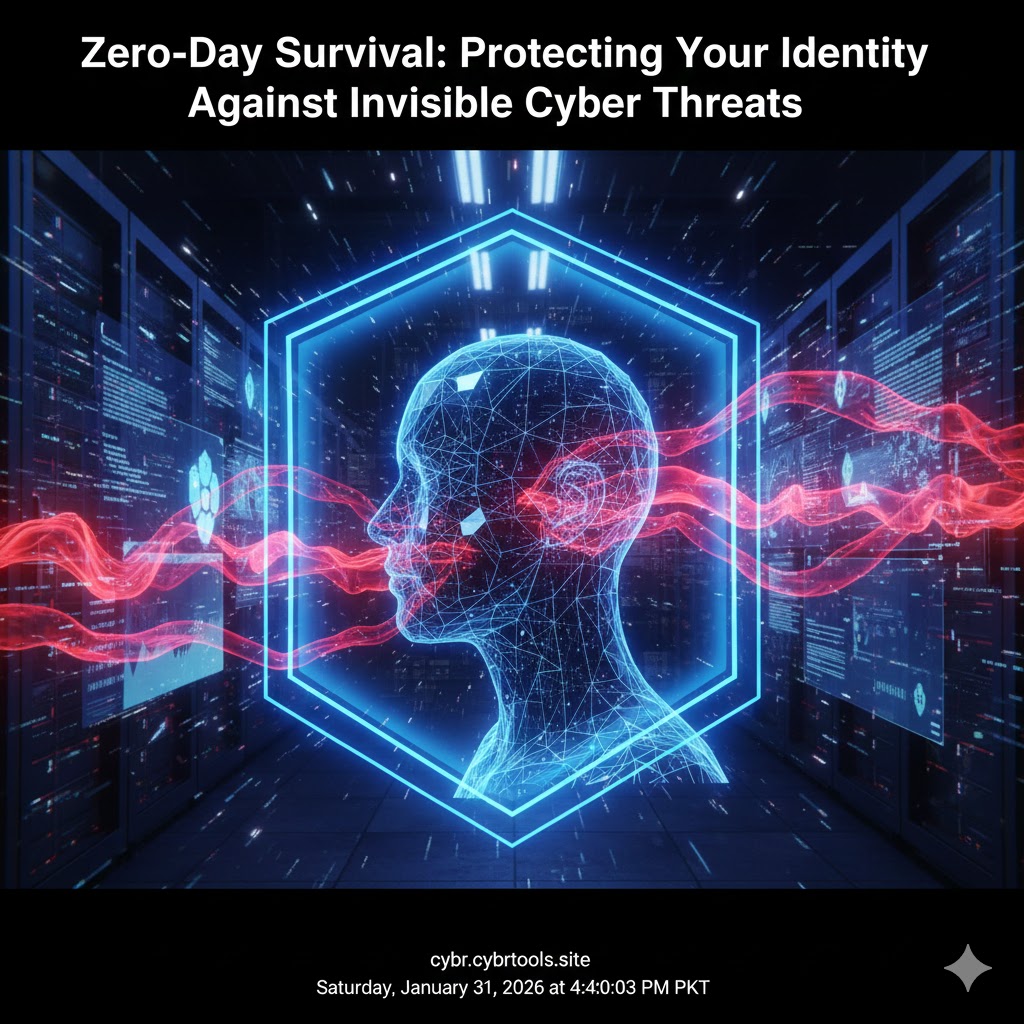
In the world of cybersecurity, “Zero-Day” is the most terrifying phrase you can hear. It refers to a software vulnerability that is discovered by hackers before the developers even know it exists. There is “zero days” of protection between the discovery of the hole and the first attack. In 2026, where our entire lives—from bank accounts to medical records are stored in the cloud, these invisible threats have become the ultimate weapon for identity thieves.
My Personal Experience: The Silent Breach

I used to believe I was “unhackable.” I used strong passwords, enabled two-factor authentication, and kept my apps updated. But last year, I became a victim of a Zero-Day exploit in a popular mobile browser.
I didn’t click a suspicious link. I didn’t download a shady file. I simply visited a reputable news website that had been compromised. Through a tiny, unknown flaw in the browser’s rendering engine, a malicious script bypassed my phone’s sandbox and began scraping my saved login credentials. I only realized something was wrong when I noticed a strange “system process” consuming 40% of my battery at 3:00 AM. By then, the damage was done. That moment changed how I view digital security—it’s not about being perfect; it’s about being resilient.
1. The Anatomy of a Zero-Day in 2026

In previous years, hackers were mostly looking for credit card numbers. Today, the target is your Digital Identity. A Zero-Day attack in 2026 isn’t a loud explosion; it’s a silent shadow.
- Targeted Exploits: Hackers now use AI to scan thousands of lines of code in seconds to find “logic flaws” that human testers missed.
- The Black Market: A high-level Zero-Day exploit for iOS or Android can sell for millions of dollars on the dark web, making it a highly profitable business for cyber-syndicates.
- Invisible Entry: These threats often enter through “trusted” pathways like a software update or a legitimate plugin—making them nearly impossible to detect with standard antivirus software.
2. Why Your Identity is the New Currency
Why go through the trouble of a Zero-Day just to steal one person’s data? Because in 2026, identity is everything. Once a hacker has your “Neuro-Profile” or your biometric data via a Zero-Day, they can:
- Impersonate you in Deepfakes: Using your stolen voice and facial data to scam your family.
- Access Synthetic Credit: Creating new financial lives under your name that you won’t discover for years.
- Bypass Biometrics: Using flaws in hardware sensors to trick fingerprint or facial recognition systems.
At cybr.cybrtools.site, we emphasize that your digital footprint is your most valuable asset. If it’s compromised through an invisible threat, the recovery process can take a lifetime.
3. The AI Arms Race: Detection vs. Exploitation

The year 2026 has brought us to a crossroads. On one side, we have AI-driven security that tries to predict attacks. On the other, we have AI-driven malware that can “morph” its own code to stay hidden.
Traditional “Signature-based” antivirus is dead. It only looks for known threats. Against a Zero-Day, it is useless because the threat is unknown. We now rely on Heuristic Analysis watching for behavioral changes in our devices. If your calculator app suddenly starts trying to access your microphone or send data to a server in a foreign country, that is the “Invisible Threat” making itself visible.
4. Survival Strategies: Building a Mental & Digital Fortress

From my own recovery, I learned that survival isn’t about the best software; it’s about the best habits. Here is how you can protect yourself:
- The Principle of Least Privilege: Don’t give apps permissions they don’t absolutely need. Does that photo editor really need access to your contacts? No.
- Hardware Isolation: For your most sensitive data like crypto keys or private documents—use “Air-Gapped” devices that never touch the internet.
- Network Segmentation: Use a guest Wi-Fi for your “Smart Home” devices. IoT devices (fridges, cameras) are notorious for having Zero-Day vulnerabilities that can be used as a bridge to your main computer.
- Regular “Digital Diets”: Delete accounts and apps you no longer use. Every unused account is a potential backdoor for a hacker.
5. Proactive Defense with Modern Tools
Security is a journey, not a destination. You need a suite of tools that do more than just “scan.” You need tools that monitor data leaks in real-time.
Our resource center at Web Tools Hub provides utilities that help you check if your email has been part of a breach or if your browser configuration is leaking more data than it should. Remember, a Zero-Day attack only succeeds if it remains hidden. By using monitoring tools, you take away the hacker’s greatest advantage: secrecy.
6. The Future: Post-Quantum Security
As we look toward the end of the decade, the threats will only get more complex. With the rise of quantum computing, even our current encryption might become a “Zero-Day” vulnerability. Staying ahead means being informed and skeptical.
Conclusion: Stay Vigilant, Stay Secure
You cannot stop a Zero-Day from being created, but you can stop it from destroying your life. By adopting a “Zero-Trust” mindset where you verify every connection and monitor every change you become a difficult target.
Identity theft in the age of invisible threats is a reality, but it doesn’t have to be your reality. Keep your guard up, keep your tools updated, and always keep a close eye on your digital shadows.
For more security insights and to check your current protection levels, visit cybr.cybrtools.site and take control of your digital future today.



Leave a Reply