
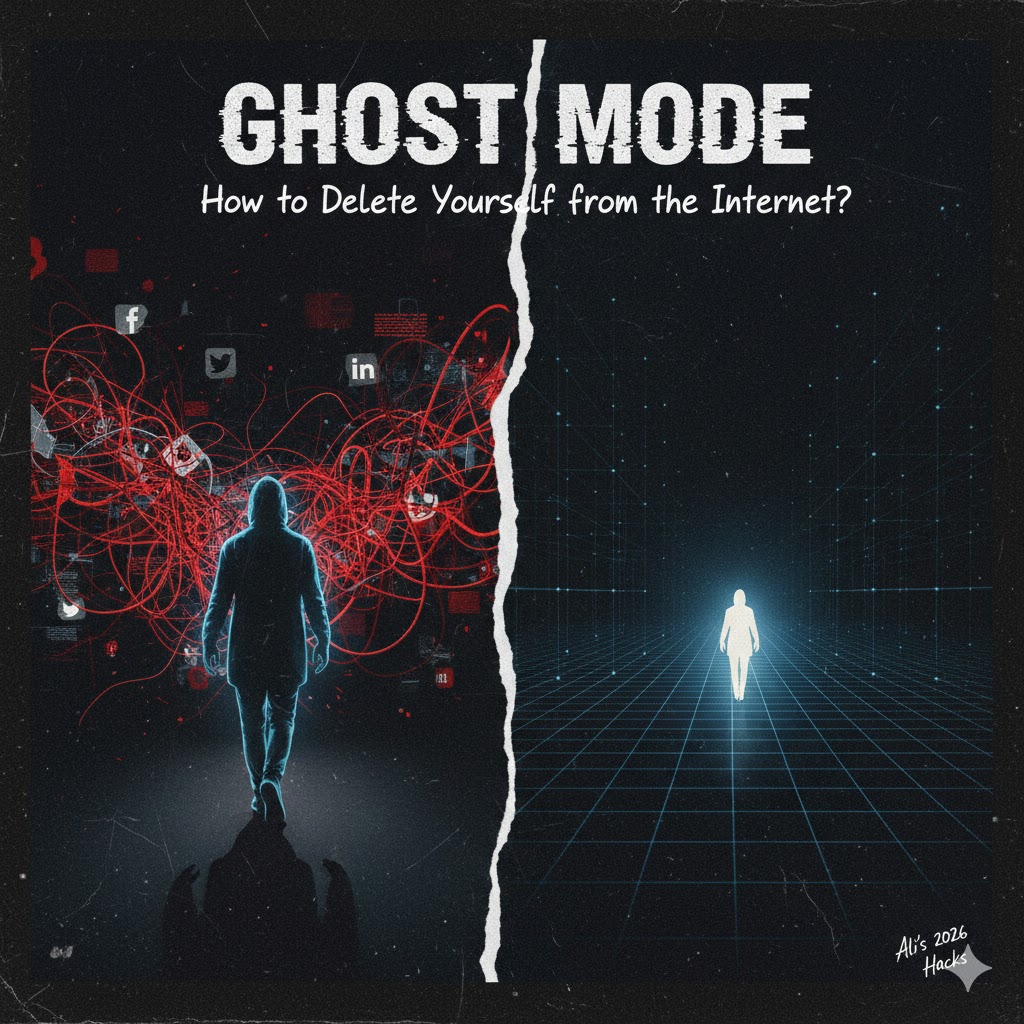
A few months ago, I sat down at my desk and did something we all do occasionally I Googled myself. But what I found shook me to the core. A photo from a high school party I thought was long gone, my old home address listed on a random directory site, and even comments I made on a gaming forum a decade ago.
It hit me then: The Internet doesn’t forget. It records.
In 2026, our digital identity has become larger than our physical selves. But what if you want to hit the “Restart” button? Is it actually possible to vanish from the web? I spent two months researching this and turned myself into a “Digital Ghost.” Today, I’m sharing the secret formula I’ve developed for the readers of cybr.cybrtools.site.
1. The Realization: Your Data is a Time Bomb

When I started my “Delete Mission,” the first question I asked myself was: “Does it even matter if my data is out there?” It matters when you realize that hackers and data brokers use these tiny fragments of your past to target your bank accounts and steal your identity.
In 2026, data privacy isn’t just a preference it’s a survival skill. If your data is online, you are a target. My experience taught me that digital cleaning isn’t just for peace of mind; it’s for absolute security.
I Googled myself last month and found my 2012 home address, a forgotten forum comment, and photos I thought were dead. The internet never forgets unless you make it.
2. Phase One: Hunting Your Digital Shadows

The first thing I did was track down my “Shadow Accounts”—profiles I created years ago and abandoned. Think of old shopping sites, forgotten forums, or niche social networks.
My Personal Hack: I checked my browser’s “Saved Passwords” list. I found over 50 websites I didn’t even remember visiting! I went through them one by one and chose “Delete Account” rather than just “Deactivate.” Remember, deactivation usually just hides your data; deletion actually removes it.
In 2026, your “Digital Footprint” is a goldmine for hackers and data brokers. If they can find your old school name or your first pet’s photo, they can find your passwords. Privacy isn’t a luxury; it’s survival.
If you find this overwhelming, check out the privacy tools at cybr.cybrtools.site that help you locate these hidden digital footprints.
3. Confronting the Data Brokers (The Invisible Enemies)

Stop being a product for people who sell your privacy for profit.
This was the toughest part of my journey. You might not know it, but sites like “Whitepages” or “Spokeo” are literally selling your name, phone number, and address. I began sending “Opt-out” requests to these brokers.
I spent 60 days going “Ghost Mode.” I hunted down 50+ “Shadow Accounts” I hadn’t touched in years. Deleting them (not just deactivating) was the first step to reclaiming my soul.
It’s tedious work, but the moment I saw my home address disappear from Google search results, the relief was incredible. I learned that you often have to email these sites personally to say, “I want my data gone.”
4. The Social Media “Burn”

Deleting social media was the biggest psychological step. Before I nuked my Facebook, Instagram, and X accounts, I made sure to download a full archive of my data. Did you know data brokers like Whitepages literally sell your phone number and location for pennies? Sending “Opt-out” requests is a pain, but watching your info vanish from Google is pure dopamine
Pro-Tip from my journey: Deleting the app does nothing. You have to go into the deep account settings to request a “Permanent Deletion.” Most platforms give you a 30-day “cooldown” period. I spent those 30 days ignoring the urge to log back in, and today, I am finally free from the “Digital Noise.”
5. Scrubbing Search Engine Results

I submitted several “Right to be Forgotten” requests to Google. If a website refuses to remove your data, Google can sometimes help by de-indexing those results so they don’t show up when someone searches your name.
Most people think deleting an app is enough. It’s not. Your data stays on their servers forever unless you trigger a “Permanent Deletion” request. I nuked it all.
Watching my search history and personal results vanish gave me a sense of “Digital Calm” I hadn’t felt in years. In 2026, Google’s algorithms are smarter than ever, but they are legally obligated to respect your privacy requests.
6. How to Stay a “Ghost”

I always say, “Don’t bring the trash back into the house after you’ve cleaned it.” Once my footprint was gone, I set new rules for myself:
Today, when you search my name, Google says: “No results found.” I’m still online, but I browse through VPNs and burner emails. I own my identity again.
- Use Pseudonyms: Unless it’s a legal document, I don’t use my real name for online shopping.
- Burner Emails: I started using “Burner Email” services for one-time signups.
- VPN is Non-Negotiable: I never browse without a VPN to ensure my IP address isn’t being tracked.
On cybr.cybrtools.site, we have a curated list of secure VPNs and burner tools that I personally use every single day.
7. The Result: Life as a Digital Ghost
Today, when I search for my name, Google simply says: “No results found.” To me, that is better than any award. I still use the internet, I still work online, but the “Trackers” are no longer following me.
Want to disappear? I’ve documented my entire step-by-step journey (and the tools I used) here: 🔗 https://cybr.cybrtools.site/





Leave a Reply